How to prepare a Pokémon card for grading
A safe way to inspect, photograph and protect a Pokémon card before requesting a visual estimate or submitting it for professional grading.
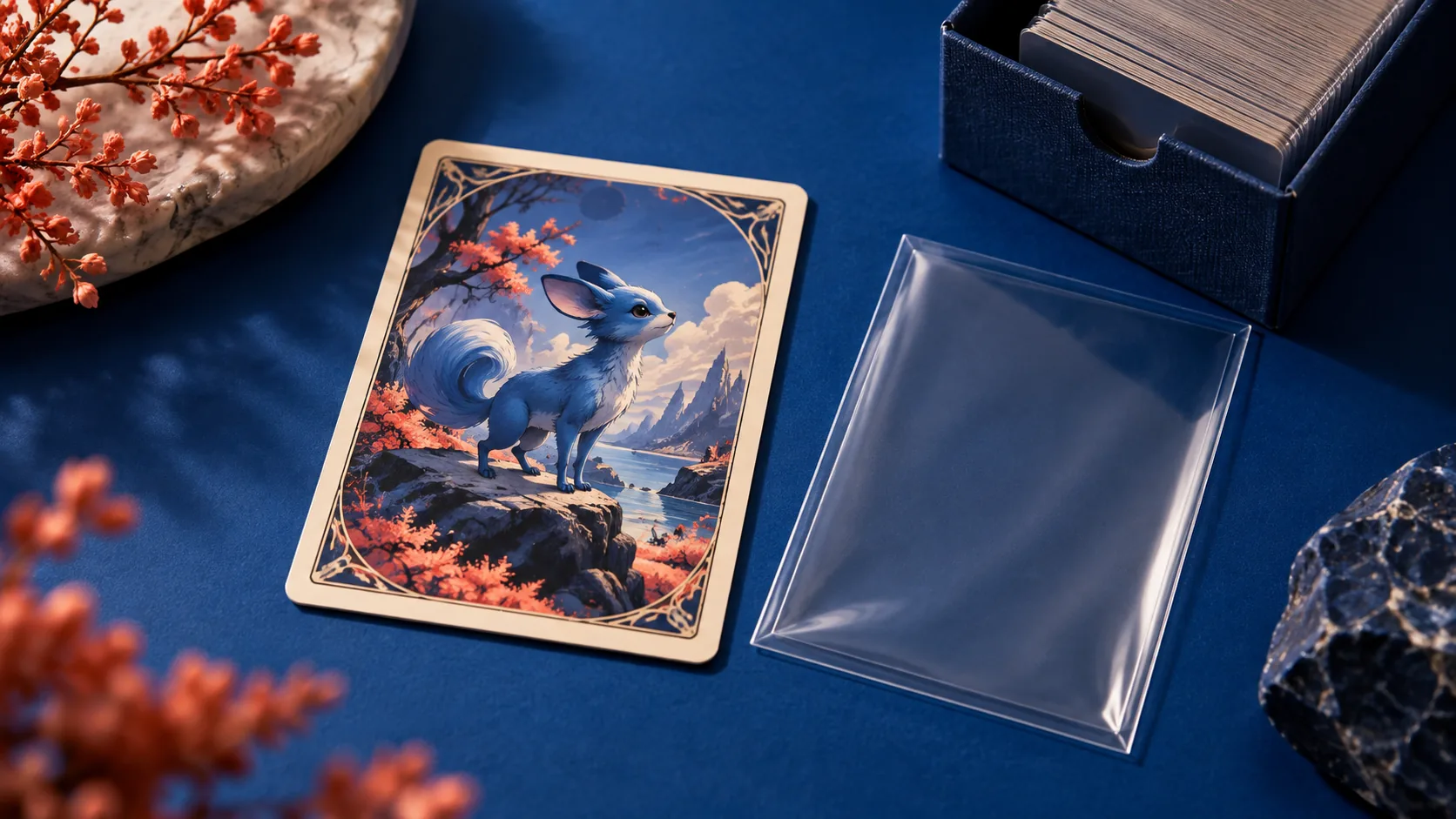
Preparing a card for grading does not mean trying to improve it. It means reducing handling risk, observing its current state and creating images that do not hide information. Work slowly, avoid interventions and keep temporary unsleeved capture separate from protected storage.
Prepare the space first
Use a stable, clean and dry table away from drinks, visible dust and moving air. For a BGT capture, place a dark matte background beneath the card. Contrast helps the guide identify the outline, while a matte surface reduces reflections that could be confused with marks.
Wash and dry your hands thoroughly before handling the card. Hold it by the edges and have its sleeve or holder ready for afterwards. Do not leave the card exposed while you arrange lights, clean the table or search for your phone.
Inspect without forcing the card
Before recording, look at the front and back under even ambient light. Confirm that all four corners are visible, no edge is covered and there are no loose particles on the background. Do not bend the card to test stiffness or press a mark to find out whether it is an indentation.
Then check the framing. A side-on photograph can distort the apparent borders. The guide to perspective and centering explains why the iPhone should stay above the card with the complete rectangle in view.
Unsleeved capture is not unprotected storage
BGT needs to see the surface without plastic between the camera and the card. A sleeve can add glare, its own scratches, dust and a second outline. Remove it only after the space and guided video sequence are ready, then return the card to protection immediately.
Storage and professional submission are different tasks. Current submission instructions may call for a soft sleeve, semi-rigid holder and a particular packing order. Always follow the chosen grader’s latest instructions. A BGT capture requirement does not replace its shipping rules.
Do not clean or correct defects
Avoid sprays, waxes, solvents, erasers, heat, weights and pressure. Do not trim fibres, recolour edges or try to flatten a curve. An intervention may damage the card and can alter what a professional needs to inspect. Published grading standards also treat some alterations or applied substances as reasons not to assign a normal grade.
If you notice loose dust, do not improvise an aggressive cleaning method. Stop the capture, protect the card and make a conservation-minded decision. BGT should document visible condition, not create a new one.
Checklist before capture
- Stable, dry table with clear working space.
- Dark matte background in position.
- Clean and completely dry hands.
- Sleeve or holder ready for afterwards.
- Front and back identified.
- Four corners and four edges inside the guide.
- No plastic, dominant glare or hand shadows.
- Slow movement during the raking-light phase.
Good preparation cannot guarantee a grade. It can improve handling safety and the evidence you later review in a visual report. BGT remains an independent photographic estimate: it does not authenticate the card or replace a professional’s physical inspection.
Before putting the card away
If an edge is cut off, the image is blurred or glare hides an area, retake that view before clearing the table. A brighter image does not always contain more detail. Keep both sides and avoid retouching photos to hide marks.
To repeat the inspection another day, record the card identifier, date and lighting conditions. Change one condition at a time. Differences between photos may come from capture rather than a physical change to the card.
From the guide to your collection
Explore the interactive examples and their simulated observations. You can create your collection on the web and browse your saved entries. Capture and evaluation take place in the iPhone app; illustrative examples do not demonstrate accuracy on your card.